Analysis
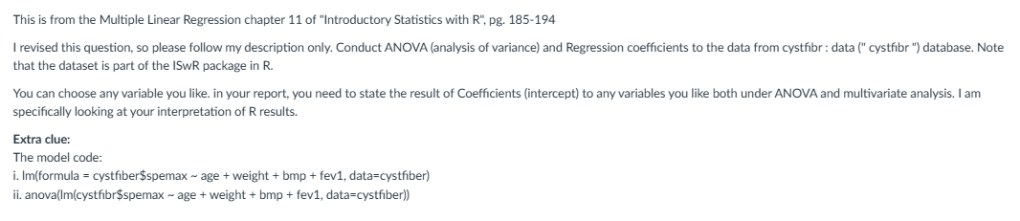
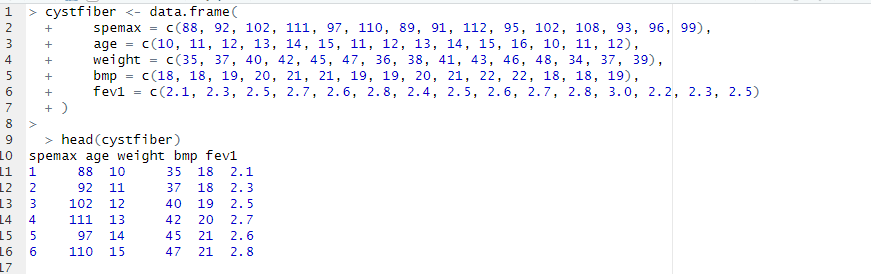
For this analysis, I ran a multiple linear regression and ANOVA using the cystfiber dataset to study how age, weight, BMP, and FEV1 affect spemax. The regression model was:
spemax = -11.094 – 12.775(age) + 4.319(weight) – 2.833(bmp) + 59.886(fev)
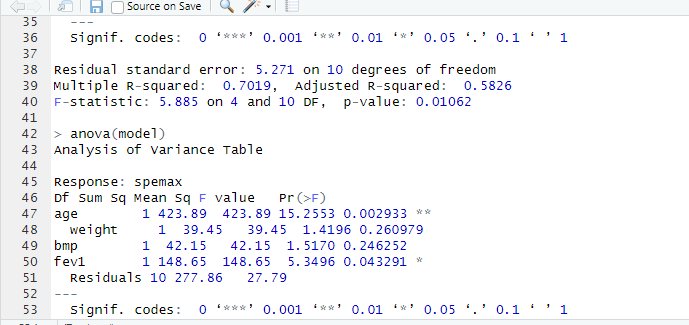
The model showed a strong overall fit (R² = 0.7019, p = 0.0106), meaning about 70% of the variation in spemax can be explained by these predictors.
From the regression results, FEV1 had a significant positive effect (p = 0.0433), indicating that higher lung function is strongly associated with higher spemax values. Age showed a negative effect, showing spemax decreases slightly with age not significantly (p = 0.1919). Weight and BMP had weaker and insignificant effects on spemax.
The ANOVA confirmed these findings. Both age (p = 0.0029) and FEV1 (p = 0.0433) significantly affected spemax, while weight and BMP did not.
Overall, the results suggest that lung function (FEV1) and age are the main predictors of spemax performance. Weight and BMP contribute less to the model. The strong R² value supports that these variables collectively explain most of the variation in spemax.
 Sydney - LIS4273
Leave a comment