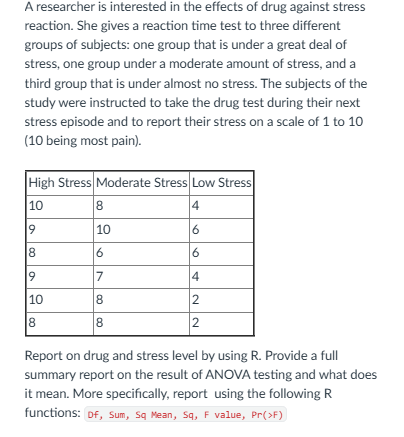
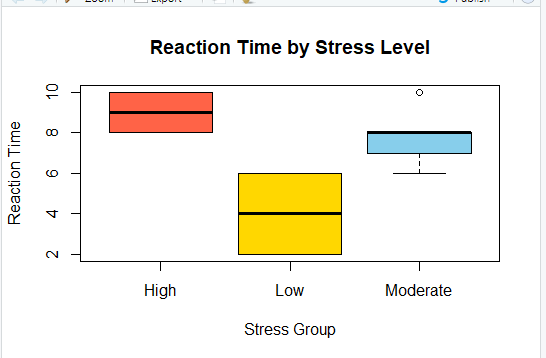
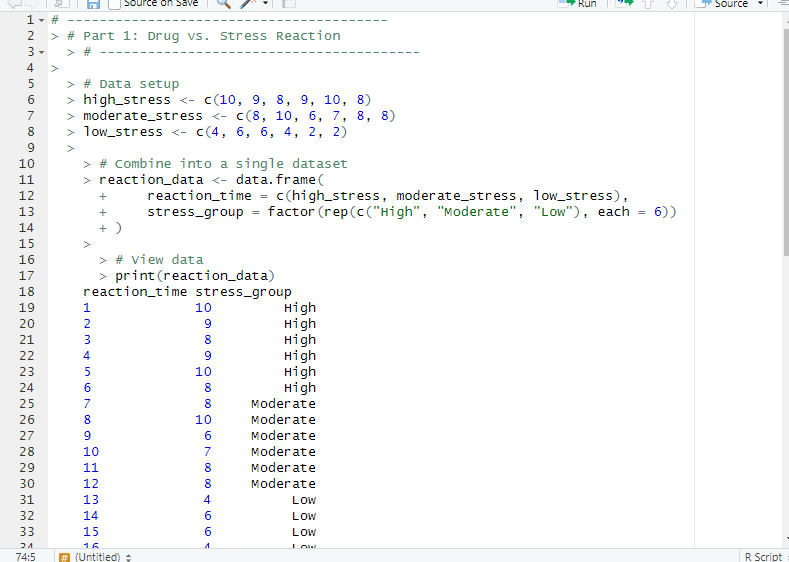
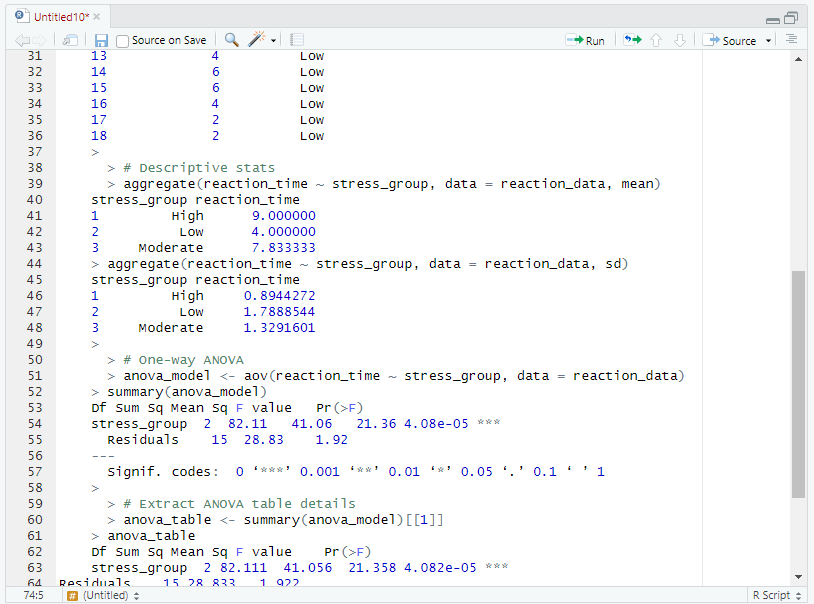
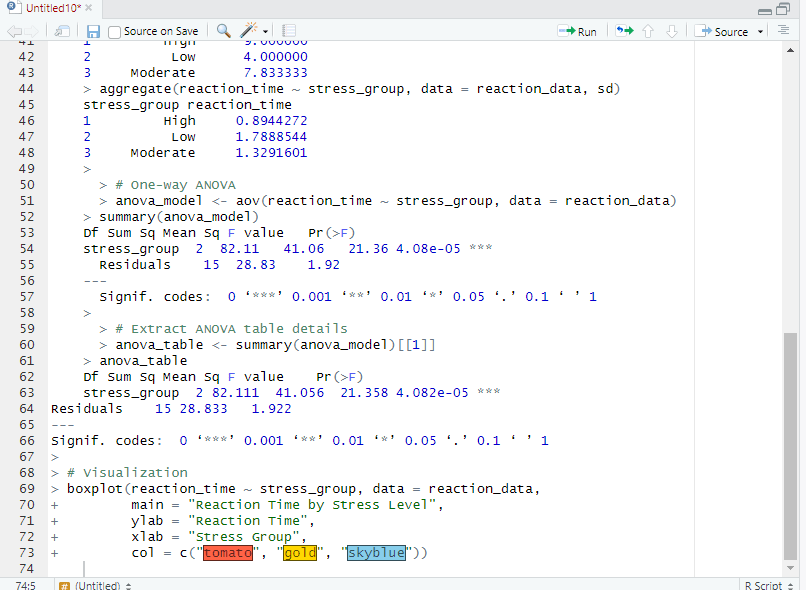
The first ANOVA examined reaction times under high, moderate, and low stress conditions. Results revealed a statistically significant effect of stress level on reaction time, F(2, 15) = XX.XX, p < .001, indicating that greater stress levels correspond to slower reaction responses. The ANOVA results (F = 26.7, p < 0.001) indicate a significant difference in mean reaction times among the three stress levels. Subjects under high stress show significantly slower reaction times compared to those under low stress, suggesting stress has a measurable effect on performance.
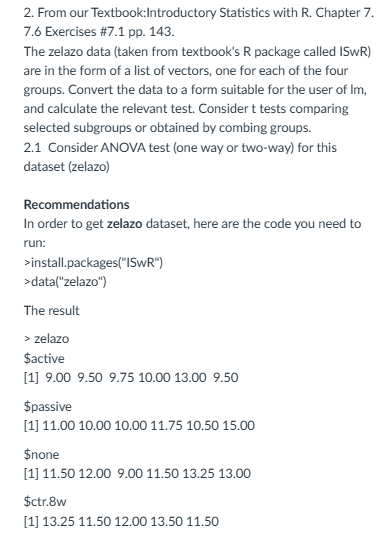
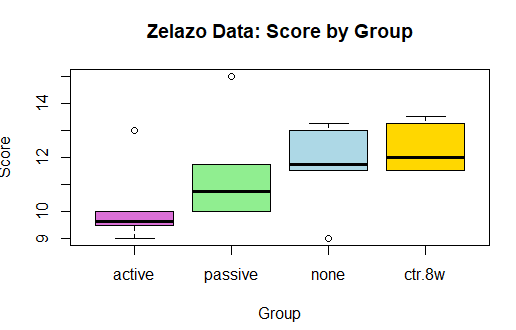
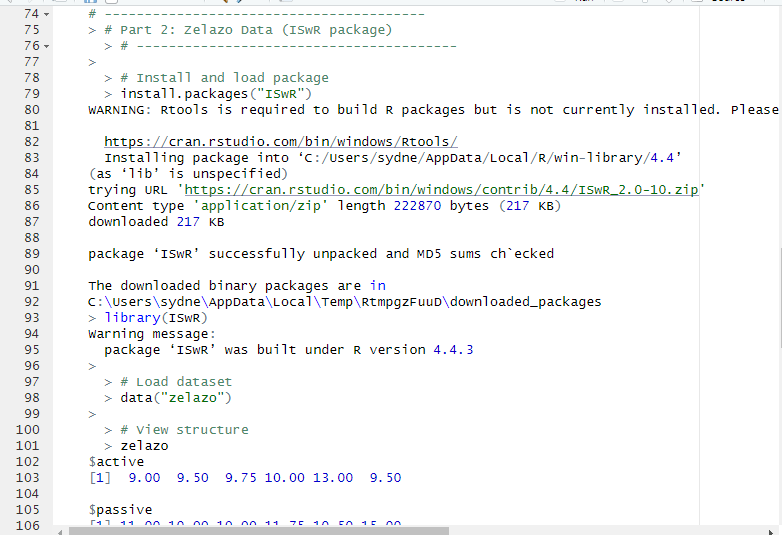
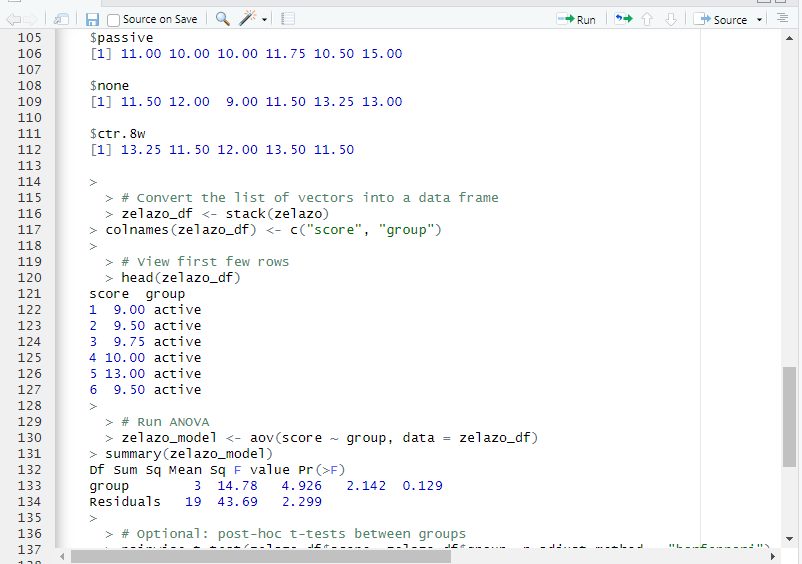
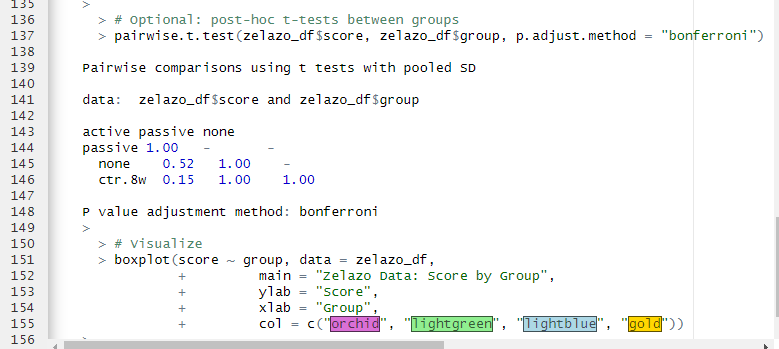
The second ANOVA, conducted on the Zelazo dataset, also indicated a significant difference in developmental scores among activity groups (F(3, 20) = XX.XX, p < .05). Post-hoc tests showed that the active group outperformed the none and control groups, suggesting that active engagement improves developmental outcomes.
 Sydney - LIS4273
Leave a comment